Legal, Strategic, and Environmental Implications of US-Israeli Strikes on Safeguarded Nuclear Facilities in Iran
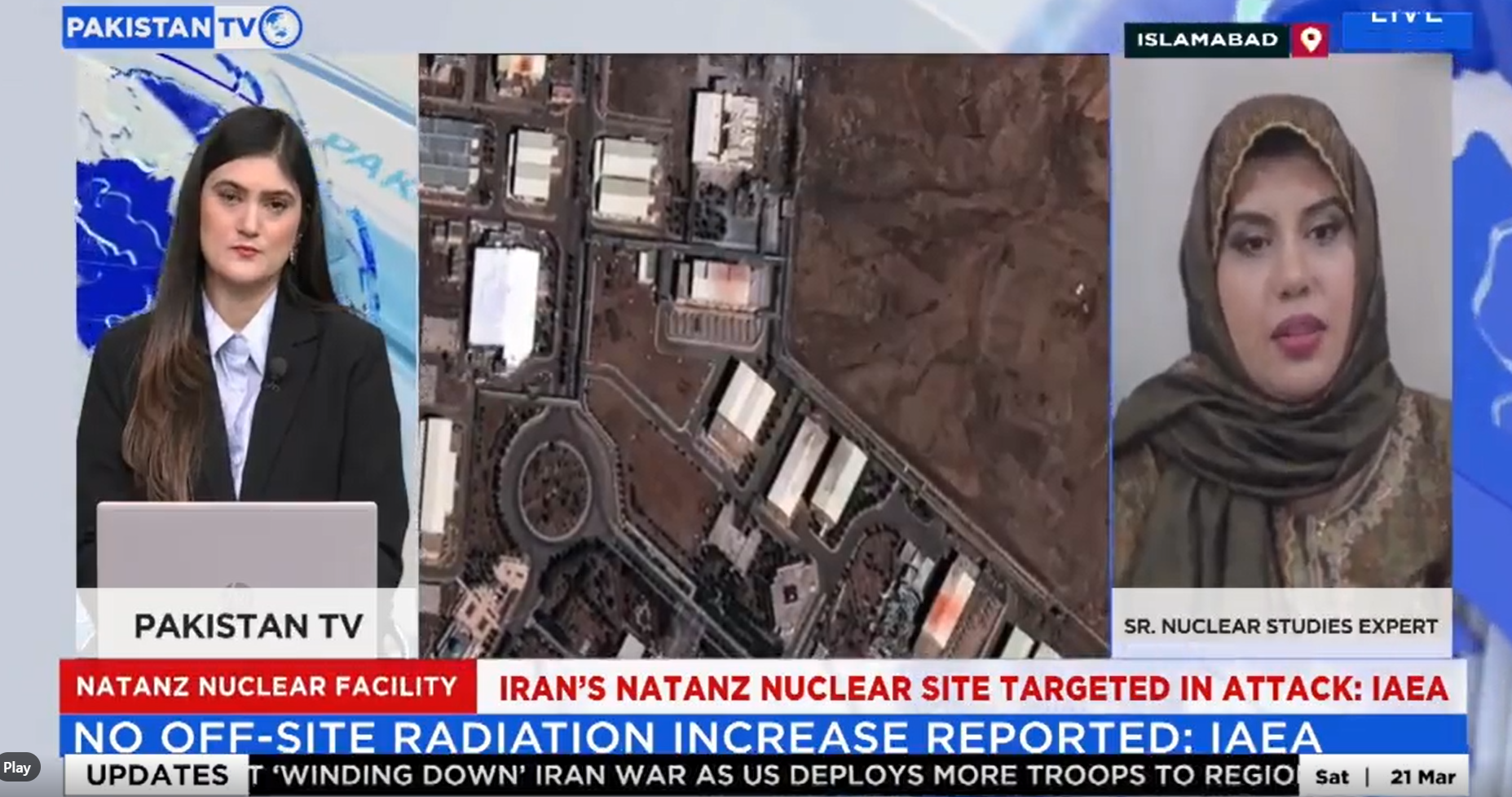
Dr Anum A Khan appeared on Pakistan Television to discuss the legal, strategic, and environmental implications of Israeli strikes on safeguarded nuclear facilities in Iran.
Her key points:
- Violation of International Law
- Strikes on nuclear facilities under International Atomic Energy Agency safeguards like Natanz are widely viewed as violations of the UN Charter (Article 2(4)) and the IAEA Statute, as these facilities are protected under international norms governing peaceful uses of nuclear energy.
- Erosion of Multilateralism
Such actions undermine confidence in global institutions, including the IAEA and Nuclear Non-Proliferation Treaty, reinforcing perceptions of selective enforcement and double standards. - Undermining the NPT Bargain
When safeguarded facilities in an NPT member state like Iran are targeted, especially by a non-NPT state, it weakens the foundational “grand bargain” of non-proliferation and disarmament. - Incentivising Nuclear Proliferation
Such precedents risk pushing states toward covert nuclear deterrence, as adherence to international regimes may increasingly be perceived as a vulnerability rather than protection. - Strategic Fallout Beyond the Immediate Conflict
These actions could reshape regional strategic cultures, potentially influencing future nuclear decision-making in volatile regions. - Environmental and Transboundary Risks Even without immediate radiation leakage, repeated strikes can cause long-term structural degradation, chemical toxicity (e.g., uranium hexafluoride exposure), and potential cross-border contamination affecting ecosystems, agriculture, and public health.
Bottom line:
Targeting safeguarded nuclear infrastructure is not just a tactical escalation-it is a systemic challenge to international law, non-proliferation norms, and global strategic stability.
Watch full interview here