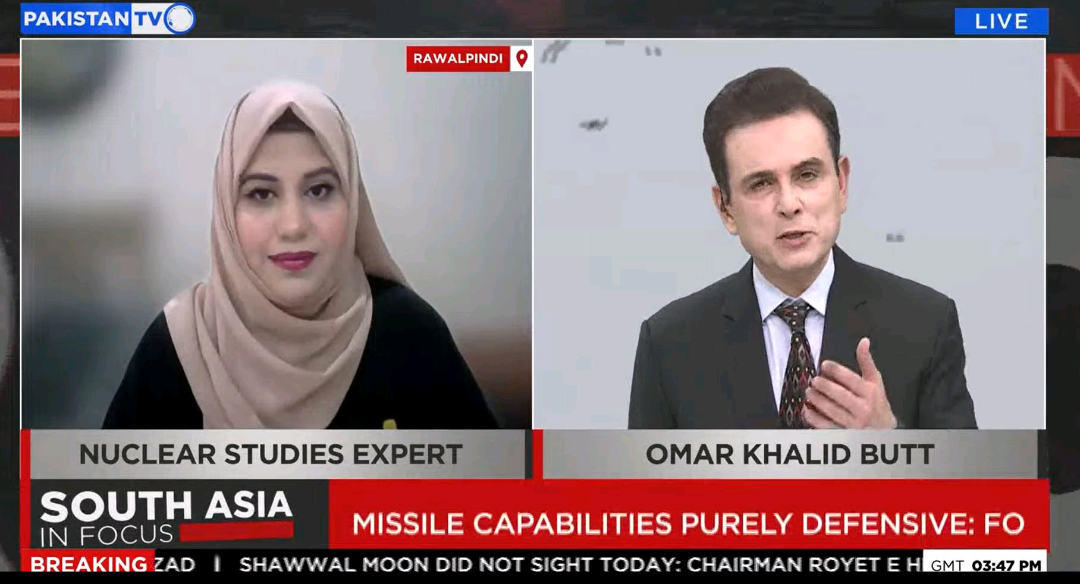
Expert View on Remarks by U.S. Director of National Intelligence Tulsi Gabbard stating Pakistan among countries developing missile capabilities that could potentially threaten the U.S. homeland.
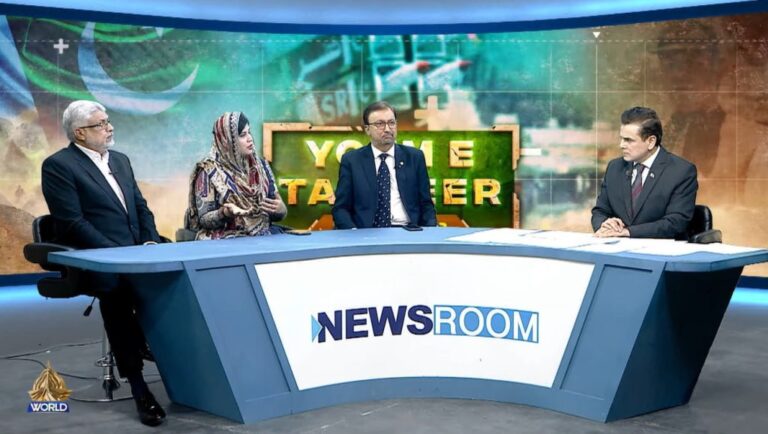
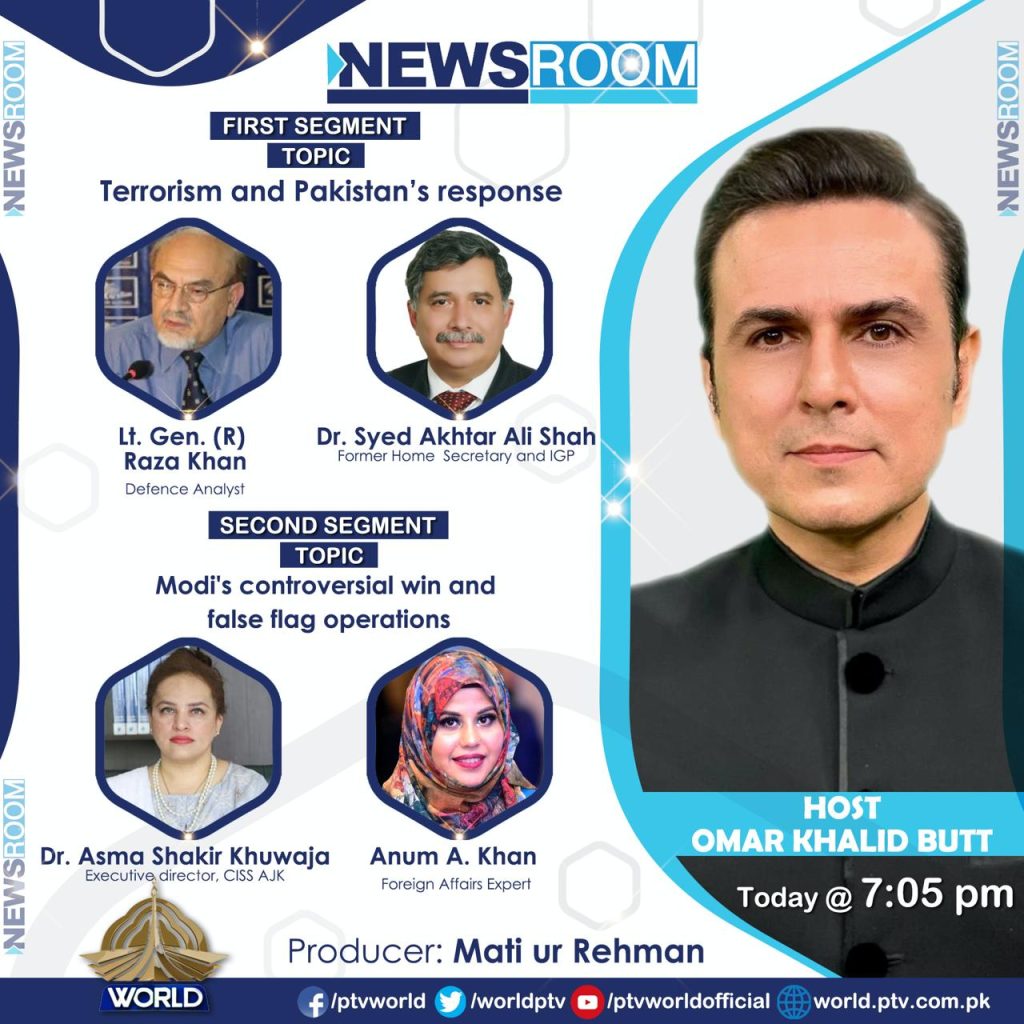
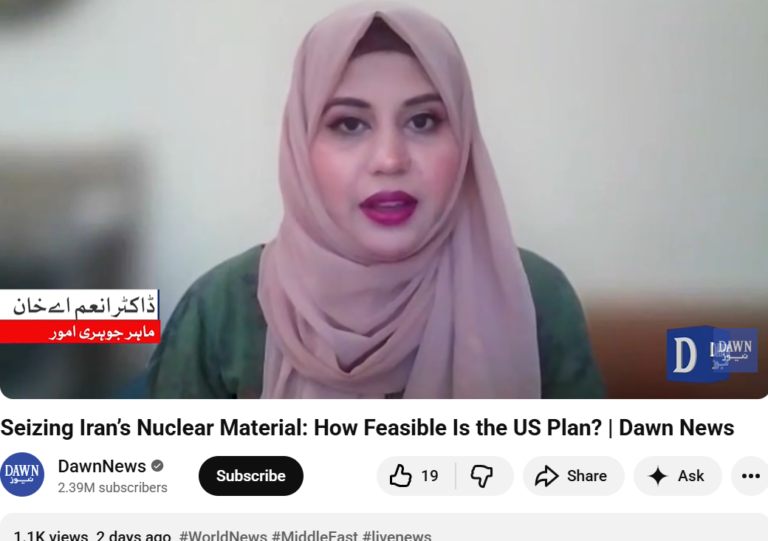
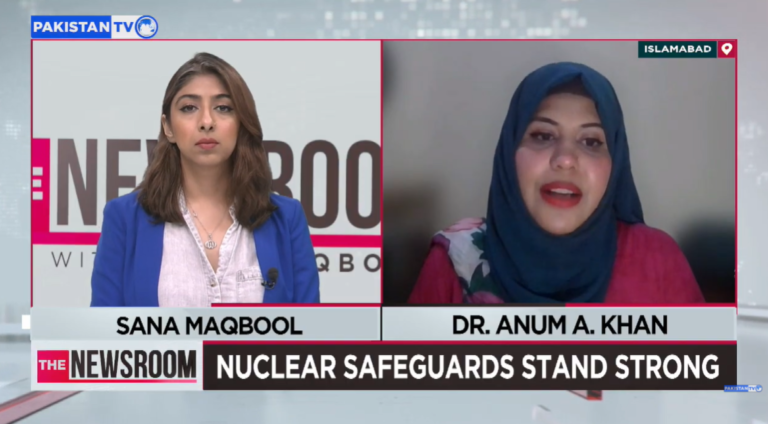
Dr Anum A Khan gave expert opinion on Pakistan TV Global to discuss recent remarks by U.S. Director of National Intelligence Tulsi Gabbard, who identified Pakistan among countries developing missile capabilities that could potentially threaten the U.S. homeland.
During the interview, Dr Khan emphasized the importance of grounding such assessments in doctrine, capability, and historical context.
Key points:
1. Pakistan’s nuclear and missile program is structurally India-centric, designed for a defined regional deterrence environment – not global power projection
There is no doctrinal or technical evidence indicating an orientation toward the United States
2. Pakistan does not possess intercontinental-range systems, nor the ISR architecture required for credible long-range targeting
3. Strategic capability must be evaluated alongside intent, and Pakistan’s intent remains firmly rooted in credible minimum deterrence
4. I also highlighted a broader pattern often overlooked in such narratives:
At critical geopolitical moments – whether during the War on Terror, the Afghanistan conflict, or other phases of U.S. strategic engagement – speculative threat perceptions about Pakistan have tended to emerge and intensify. These narratives have historically coincided with periods where external pressure or policy leverage over Pakistan was being exercised.
In the current context of heightened global tensions, including ongoing instability linked to the Middle East, such framing risks once again blurring the line between strategic assessment and political signaling.
It is therefore essential that nuclear discourse remains evidence-based, context-driven, and analytically sound, especially when it has implications for regional stability and international security.
Watch the full interview here.