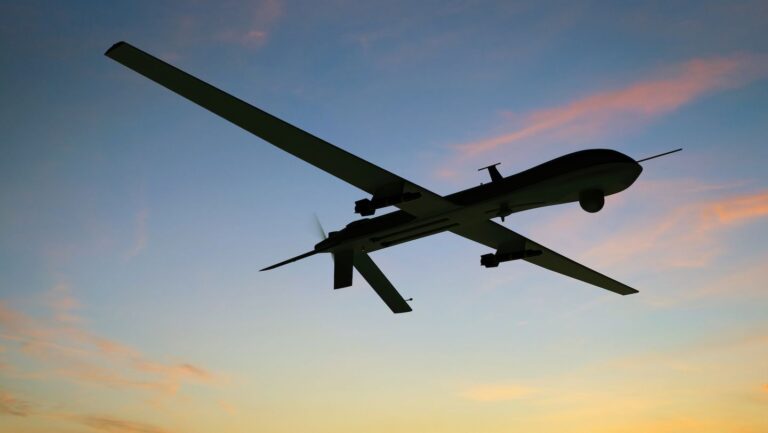

AI’s Oppenheimer moment: Establishing regulations
By Muhammad Ali Baig, Dr Anum A Khan
This article was published by The Interpreter at Lowy Institute Australia. Access here
By Muhammad Ali Baig, Dr Anum A Khan
This article was published by The Interpreter at Lowy Institute Australia. Access here
By Dr Anum A Khan No state can overlook actions of other states undermining its national security. Pakistan also developed nuclear weapons because of an existential threat from India. With this unavoidable correction of strategic equilibrium in South Asia, it is commendable how the scientific community of Pakistan, with the co-operation of the successive governments, utilized peaceful…
By Dr Anum A Khan Over the last two decades, the debate on gender roles in security has gained traction, focusing on including women in policy-making circles. Wide-ranging benefits of an enhanced role range from cultivating creativity and innovation to benefiting from exceptional communication and problem-solving skills. The UNSC Resolution 1325 on Women, Peace, and Security (WPS)…
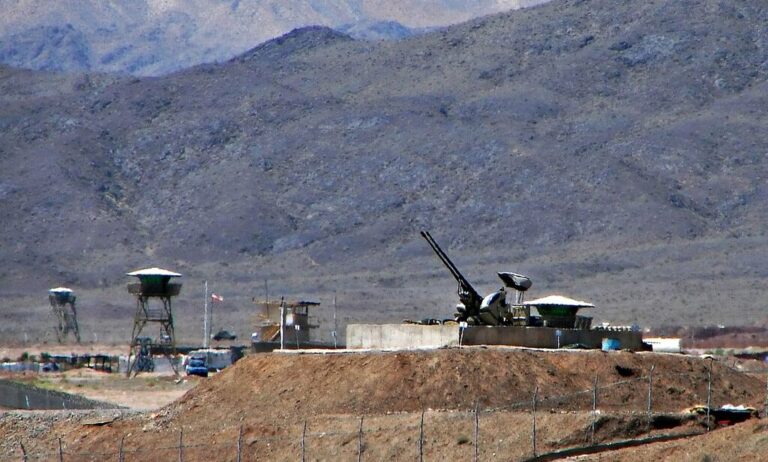
By Anum A Khan The recent U.S.-Israel attack on Iran’s Natanz uranium-enrichment facility and the Iranian attack targeting Israel’s own nuclear enrichment facility near Dimona reflect an accelerating and dangerous shift in global nuclear politics: the erosion of the international norm against attacking critical infrastructure during a conflict. In the June 2025 war as well as the current conflict, the…
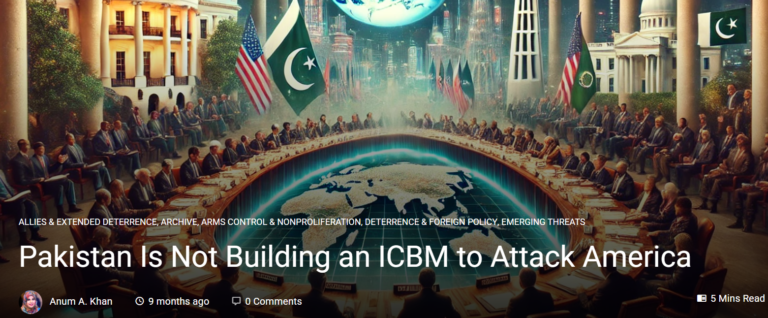
By Dr Anum A Khan Misperceptions are circulating that Pakistan is an intercontinental ballistic missile (ICBM) threat to the United States despite the fact that none of its missiles have a range beyond 2,750 kilometers (km)—the distance needed to cover India. This article has been published by US National Institute for Deterrence Studies
On 9th June 2026, the Network for Security, Strategy and Technology (NESST) participated in the United Nations Institute for Disarmament Research (UNIDIR) Road to AISE webinar series, contributing to a timely discussion on the evolving dynamics of international military AI governance. The webinar, “Waypoint 3: Shifting Weights and Dynamics in International Military AI Governance,” brought…
By Dr Anum A Khan Artificial Intelligence will alter deterrence dynamics and coercion between nuclear weapon states in unique ways. Perhaps the most notable global shift in the past decade has been the rapid transformation in technological innovation. The 21st century has brought significant new developments for waging warfare, both intuitively and intentionally, as artificial…