Inside NESST’s Powerful Strategic Engagements Shaping Canberra Fellowship 2026
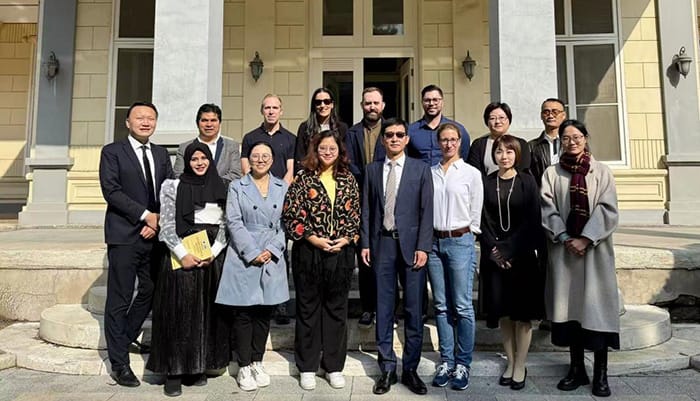
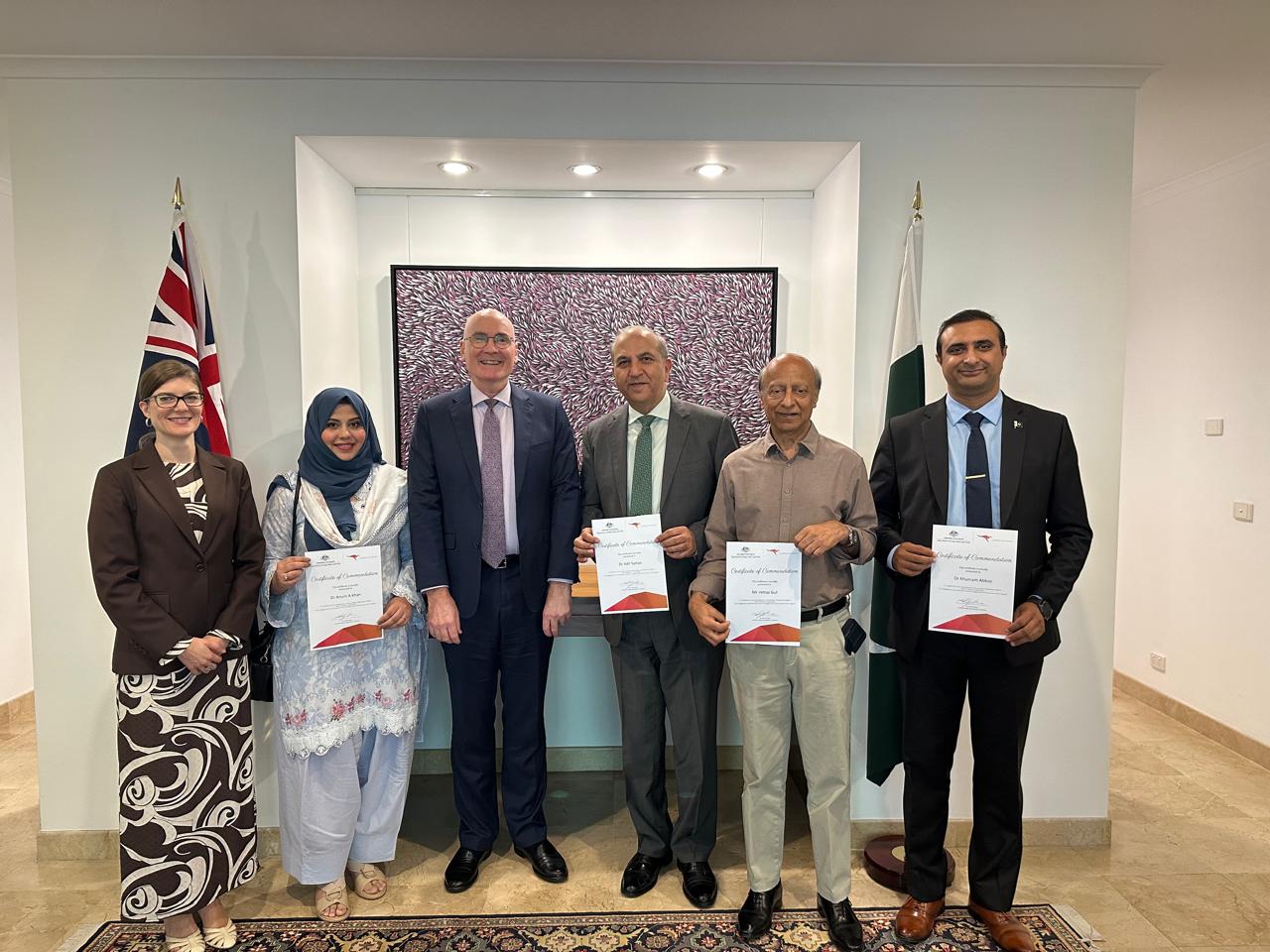
Dr. Anum A. Khan, Founder and Executive Director of the Network for Security, Strategy and Technology (NESST), participated in the Canberra Fellowships Program 2026, organized by the Australian Government’s Department of Foreign Affairs and Trade (DFAT). The program, held from 26 April to 2 May 2026 across Melbourne, Canberra, and Sydney, aimed to enhance mutual understanding and strengthen engagement between Pakistan and Australia within the broader Indo-Pacific context.
The Pakistan delegation included Dr. Anum A. Khan, Khurram Husain, Imtiaz Gul, Khurram Abbas, and Dr. Adil Sultan, representing a mix of policy, media, and security expertise. The multidisciplinary composition of the delegation enabled substantive dialogue with Australian policymakers, academics, and strategic community representatives on key regional and global issues. The 2026 program also marked the inaugural cohort of the Canberra Fellowships initiative, bringing together emerging voices from Pakistan.
It was a distinct honor for NESST that its Executive Director, Dr. Anum A. Khan, participated as the only woman from Pakistan in the delegation, contributing to representation in high-level policy engagement. This representation was particularly meaningful in the context of Australia’s broader commitment to gender inclusion in policymaking and diplomacy. As of 2026, women constitute approximately 59 percent of Department of Foreign Affairs and Trade (DFAT)’s workforce, including many in senior leadership and policy roles. The strong presence of women across these engagements reflected the growing integration of Women, Peace and Security (WPS) principles into contemporary foreign and security policy discourse.
Through a series of high-level meetings, roundtables, and institutional engagements, the fellowship provided a platform for exchange on Indo-Pacific strategy, emerging technologies, non-proliferation, and regional security dynamics. The following sections outline key engagements and discussions undertaken during the program. NESST extends its sincere appreciation to the Australian Government, the DFAT, and all partner institutions and experts for facilitating a highly enriching and constructive program.
Views Exchanged During the Visit
Pakistan’s Perspective
The Strategic Mutual Defence Agreement (SMDA) signed between Pakistan and Saudi Arabia on 17 September 2025 represents an important evolution in bilateral security cooperation. However, it should be understood as a formalization of existing defence ties rather than an expansion into extended deterrence, and it does not constitute a nuclear umbrella arrangement. From a strategic stability perspective, the provision of a nuclear umbrella requires extensive infrastructure, force posture, long-range delivery systems, and global reach- capabilities that Pakistan neither seeks nor possesses. Pakistan’s nuclear program remains qualitatively and quantitatively calibrated to deter India, reflecting a restrained and defensive posture that is not oriented toward third-party security guarantees.
Pakistan’s nuclear doctrine is exclusively India-centric, grounded in the principle of Credible Minimum Deterrence (CMD). The adoption of Full Spectrum Deterrence (FSD) should not be interpreted as a departure from CMD, but rather as its operational extension across strategic, operational, and tactical levels to address evolving threats. In this context, narratives portraying Pakistan as pursuing intercontinental strike capabilities against the United States are misleading, as they overlook both technical constraints (limited missile ranges) and the strategic logic underpinning Pakistan’s deterrence posture, which remains regionally confined.
With regard to emerging security arrangements, Pakistan views developments such as AUKUS primarily through a non-proliferation lens, particularly in terms of precedent-setting implications. Concerns regarding the Quadrilateral Security Dialogue (Quad) relate to the potential for technology transfers to India, which could alter the regional military balance and impact the Pakistan–India deterrence equation.
Pakistani delegates underscored that Pakistan has borne significant costs in the fight against terrorism, with over 100,000 civilian and security casualties during the US-led War on Terror, and continues to face persistent threats emanating from instability along the Afghan border as well as hostile activities attributed to India.
Australian Perspective
Discussions with Australian counterparts highlighted a distinct strategic outlook shaped by geography, alliance structures, and evolving global dynamics. Historically, Australia has remained relatively insulated from direct security threats. However, the emergence of a more fragmented and competitive multipolar order has brought strategic pressures closer to its immediate environment. As a result, Australia increasingly views the Indo-Pacific as its primary theatre of strategic engagement, with a focus on maintaining a stable, open, and inclusive regional order.
Australia’s economic security is deeply tied to maritime trade, with over 99 percent of its trade by volume and around 80 percent by value transported by sea. This dependence underscores the centrality of secure sea lines of communication and shapes its strategic priorities. Australia’s approach combines a strong alliance with the United States, regional initiatives such as the Pacific Step-Up, and long-term defence investments, most notably AUKUS, aimed at deterring coercion and enhancing resilience.
At the same time, Australia faces the challenge of balancing its deep economic interdependence with China, its largest trading partner, with bilateral trade exceeding A$300 billion, alongside its strategic alignment with the United States. This reflects an effort to maintain strategic autonomy while managing external pressures, particularly in light of evolving United States policies and alliance expectations.
With regard to AUKUS, Australian perspectives emphasize that Pillar I remains exclusive to Australia, particularly in relation to nuclear-powered submarine capability. Pillar II focuses on the rapid acquisition and integration of advanced technologies, including cyber and artificial intelligence, to enhance warfighting capabilities. There is currently no expectation of an expanded “AUKUS Plus” framework, and cooperation under AUKUS is expected to remain tightly structured among existing partners.
Discussions also reflected evolving debates around regional groupings. Some interlocutors noted emerging arguments regarding the future of the Quadrilateral Security Dialogue, including speculative views that India’s role could be reconsidered in favor of alternative partners such as the Philippines, particularly in the context of maritime security and more operational military cooperation in the South China Sea. While these perspectives remain part of ongoing debate rather than formal policy, they reflect broader uncertainties about alignment patterns in the Indo-Pacific.
Australia’s strong normative stance on non-proliferation, including its opposition to nuclear testing, remains an important component of its strategic identity. Historical references were made to the British nuclear tests conducted in Australia between 1952 and 1963 at sites such as the Montebello Islands, Emu Field, and Maralinga. These experiences continue to shape Australia’s policy sensitivities toward nuclear issues and non-proliferation norms.
Engagements also reflected an appreciation among Australian counterparts of Pakistan’s geostrategic challenges and regional role, including its complex security environment and diplomatic engagement in regional crises.
Overall, there was a clear emphasis on enhancing mutual understanding and awareness, particularly regarding Australia’s strategic priorities, including AUKUS, the Quadrilateral Security Dialogue, and its broader role in the evolving Indo-Pacific security architecture.
Dr. Anum A. Khan’s Strategic Engagements in Australia
1. Melbourne | Australian Institute of International Affairs (AIIA) Roundtable
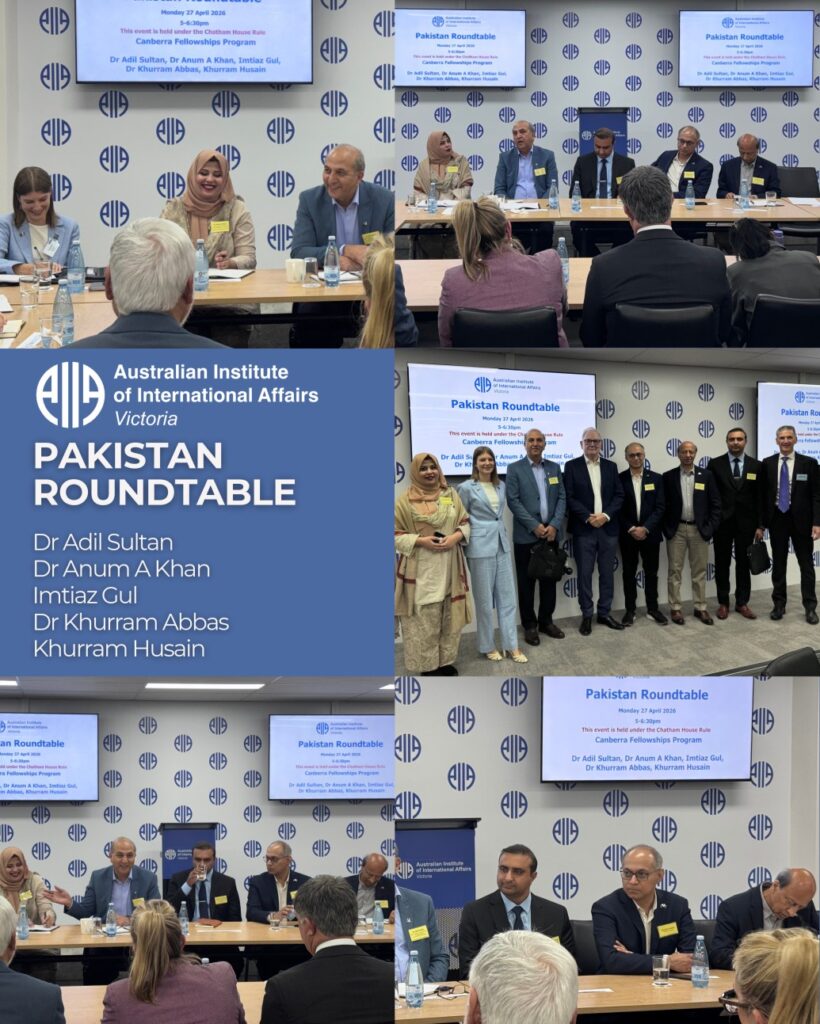
Roundtable at the AIIA, Victoria, moderated by John Richardson, with opening remarks by Yasmin Bottos (First Secretary, Australian High Commission, Islamabad).
The discussion enabled candid exchange on Pakistan’s regional trajectory, strategic outlook, and evolving geopolitical environment. Moreover, Pakistan Australia relations were discussed in depth to find convergences between the two
The session brought together Australian policy stakeholders and members of the Pakistan delegation for open and off-the-record dialogue.
2. Melbourne | Academic Engagement (Deakin University)
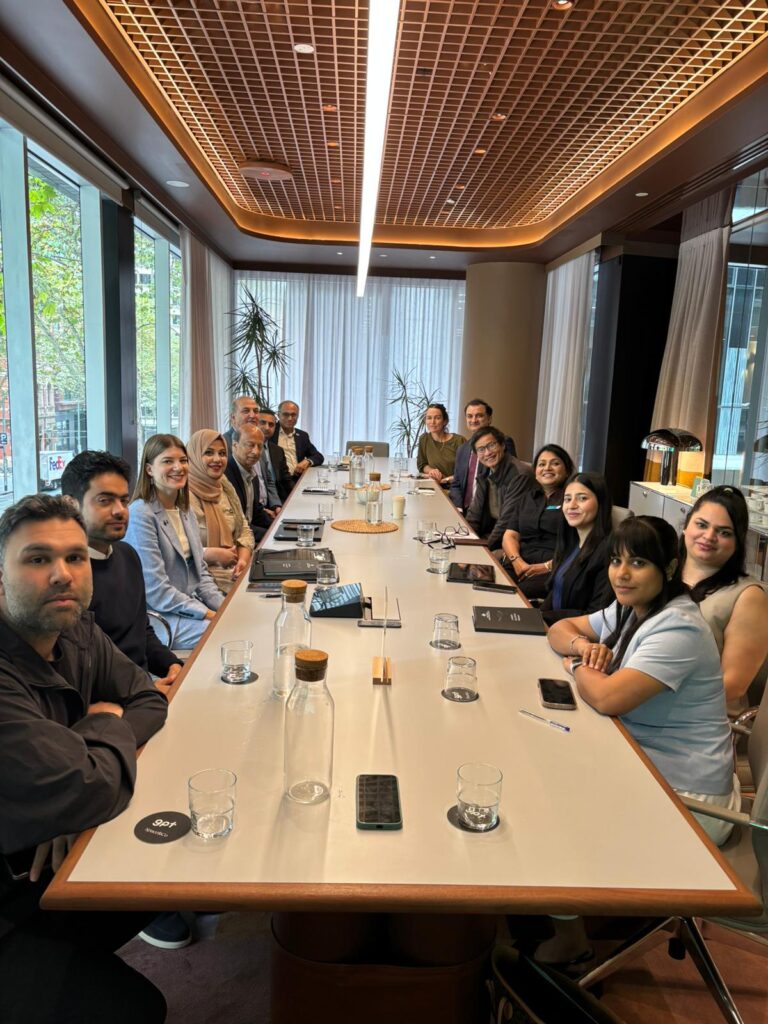
Roundtable at Deakin University with Professor Baogang He, Dr Seema Khan, Dr Emily Tannock, Dr Hamid Khattak, and graduate researchers, focused on regional security and policy discourse. Discussions focused on Indo-Pacific political dynamics, regional security challenges, and Pakistanis at Australia, providing an academic-policy interface for deeper analysis.
3. Canberra | DFAT Roundtable on Indo-Pacific Priorities
Participation in a high-level roundtable at the Department of Foreign Affairs and Trade (DFAT) on Australia’s Indo-Pacific priorities and strategic outlook. The discussions brought together senior DFAT officials, predominantly women in leadership roles, working across key portfolios including the Quad, Indo-Pacific partnerships, AUKUS, and counter-terrorism.
The session focused on:
• Australia’s evolving Indo-Pacific strategy and regional partnerships
• Strategic rationale and regional implications of AUKUS
• Counter-terrorism cooperation and regional security engagement
• Pakistan’s role in regional stability and emerging geopolitical dynamics
The roundtable concluded with an extended interactive discussion, allowing for deeper policy engagement and exchange of perspectives.
4. DFAT | Official Lunch with Senior DFAT Leadership
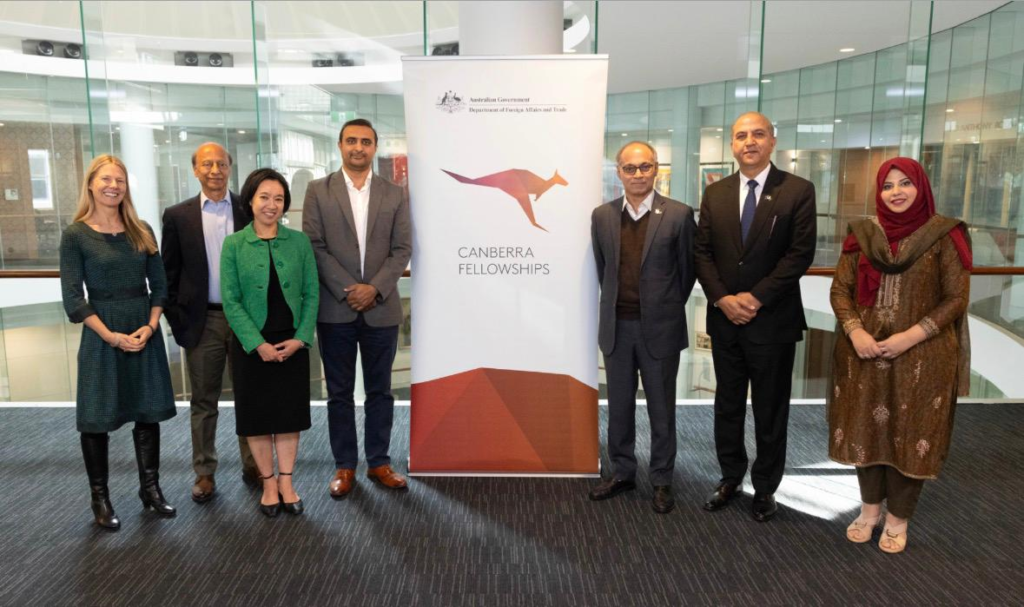
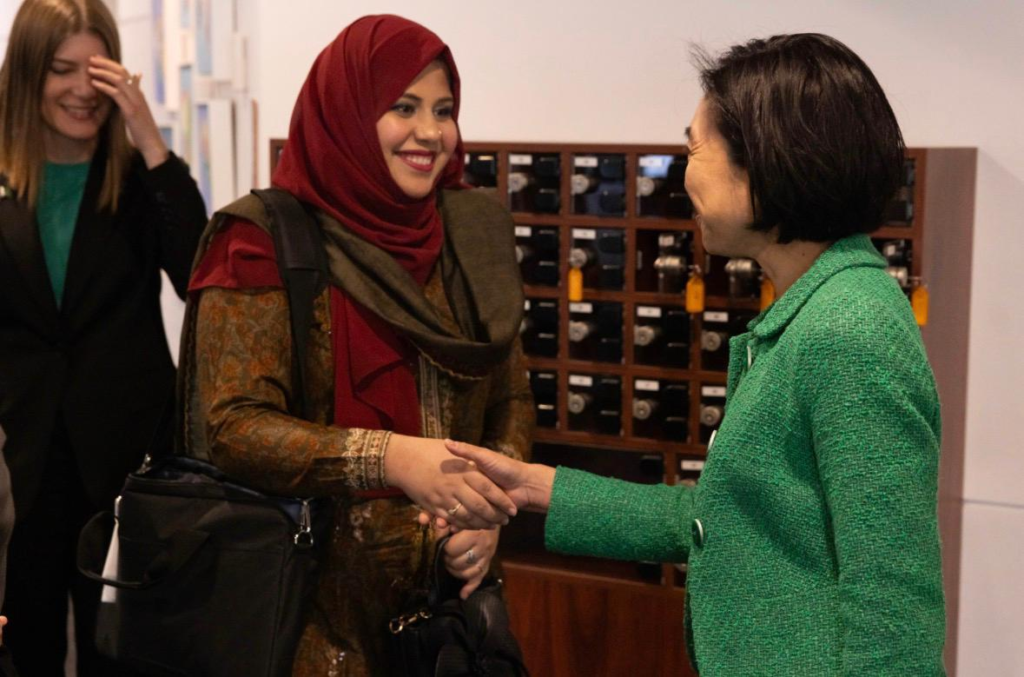
Participation in an official lunch hosted by senior leadership from DFAT’s South and South-East Asia Group in honour of the Canberra Fellows. Discussions focused on regional diplomacy, strategic developments in West Asia, and Pakistan’s potential role in mediation and de-escalation efforts in the context of U.S.–Iran tensions.
5. DFAT | Roundtable on Non-Proliferation and Arms Control
Participation in a dedicated DFAT roundtable on non-proliferation, arms control, safeguards, and emerging technology governance. The session brought together senior officials and experts working on arms control, counter-proliferation, safeguards, technology partnerships, and strategic policy, including representatives from Australia’s safeguards and non-proliferation community.
Key discussions covered:
• Global non-proliferation frameworks and emerging strategic challenges
• Technology governance, dual-use risks, and emerging technologies
• Safeguards, compliance, and evolving arms control mechanisms
• Regional implications of shifting strategic and technological balances
The exchange provided an important platform for discussing the impact of emerging technologies on strategic stability and international security.
6. DFAT | Engagement with South & Central Asia Division
Informal engagement with senior DFAT officials from the South & Central Asia Division, including officials working on Pakistan and India portfolios. Discussions focused on Pakistan–Australia relations, regional developments, strategic priorities, and opportunities for greater policy engagement and cooperation.
7. Australian Parliament | Governance & Policy Insight
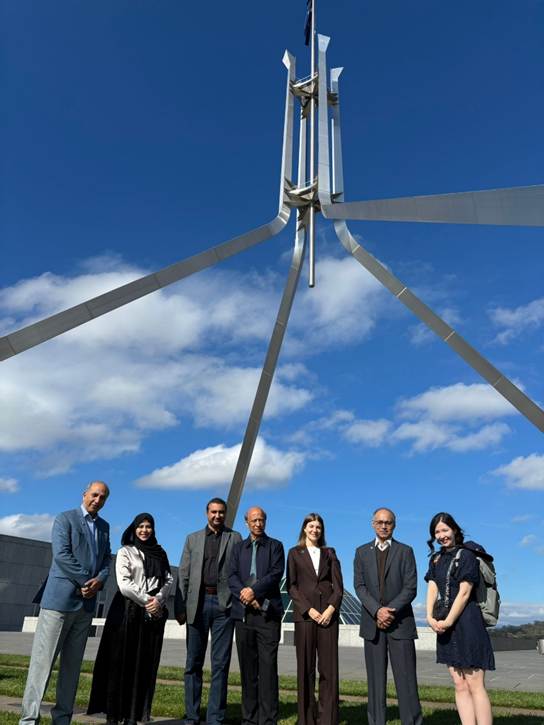
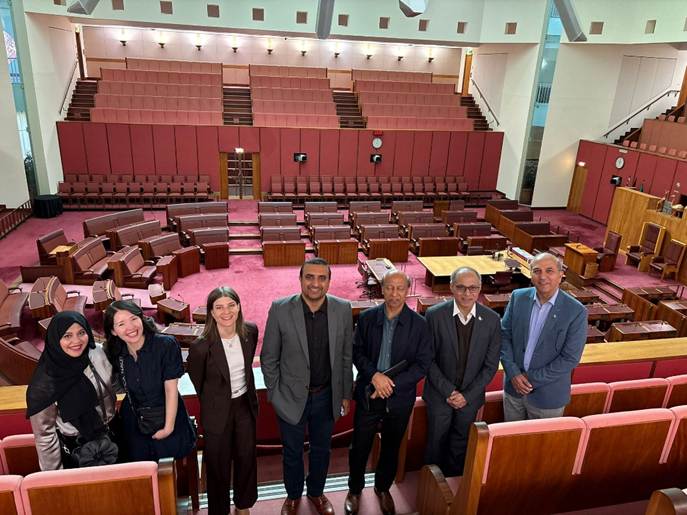
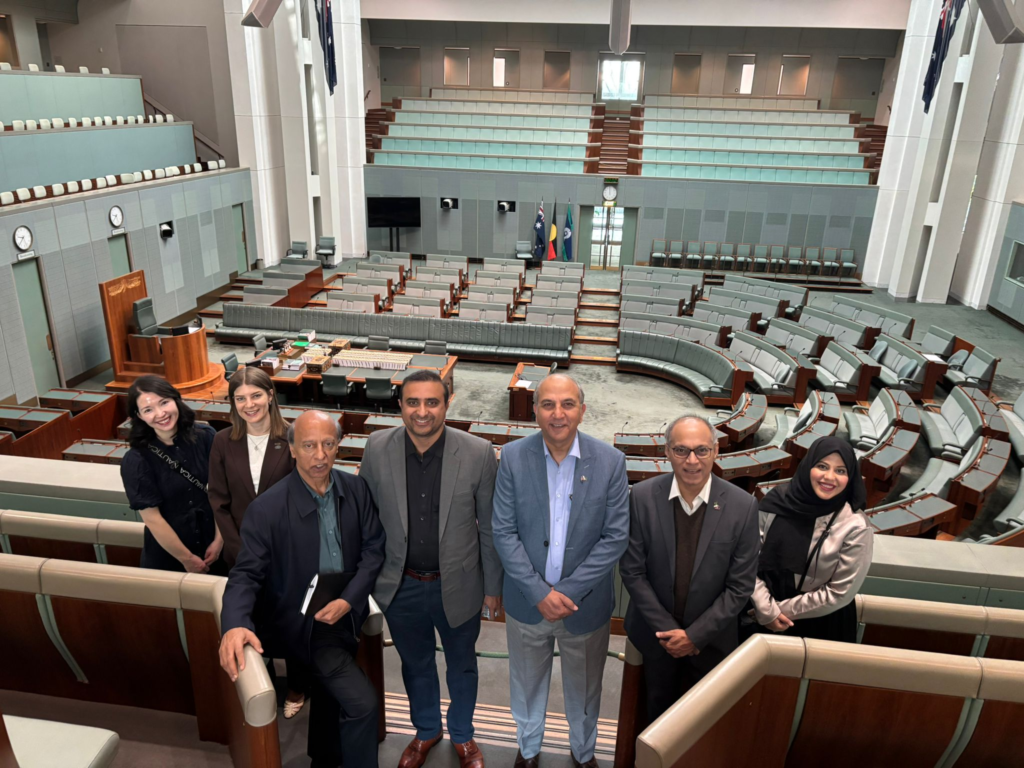
Visit to the Australian Parliament House, providing insight into legislative processes and governance structures shaping foreign and security policy.
8. ASPI + Department of Defence | Strategic Roundtable
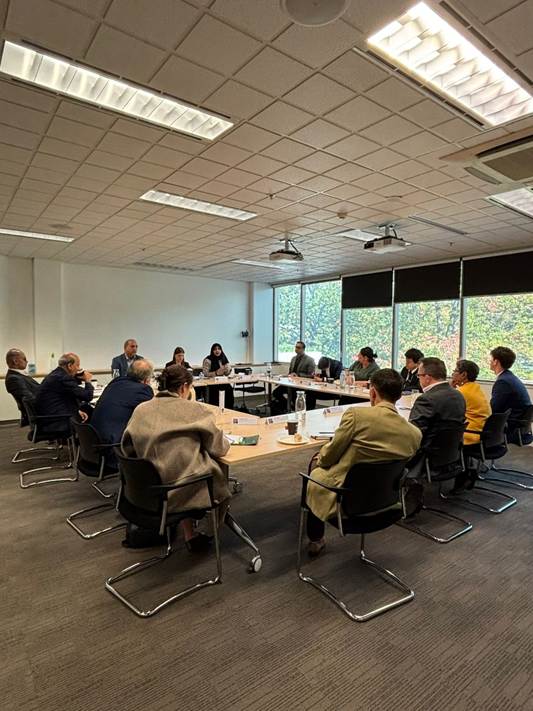
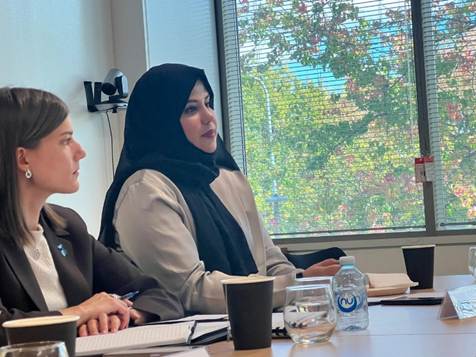
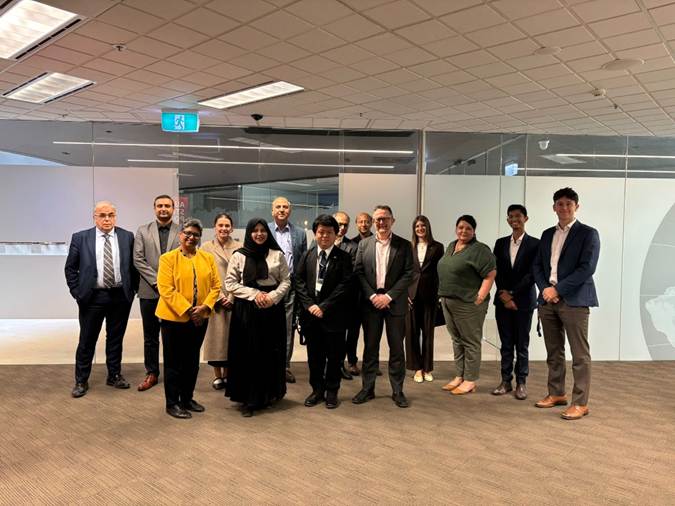
Strategic roundtable at the Australian Strategic Policy Institute (ASPI), with participation from officials linked to the Department of Defence.
Notable participants included:
- Mike Hughes (Director, Defence, Intelligence and National Security Program)
- Rajesh Rajagopalan (Senior Fellow, ASPI)
- Dr Frederic Grare (Senior Research Fellow, National Security College, Australian National University)
Dr. Anum A. Khan, alongside Dr Adil Sultan, presented on Strategic Stability in South Asia, addressing:
- Post-May 2025 India–Pakistan crisis dynamics
- Deterrence stability and escalation risks
- Regional perceptions of strategic partnerships
- Pakistan’s role as a mediator in US and Israel’s war on Iran and Pakistan’s SMDA with Saudi Arabia in light of the Middle east conflict.
9. Sydney | United States Studies Centre (USSC) | Strategic Dialogue
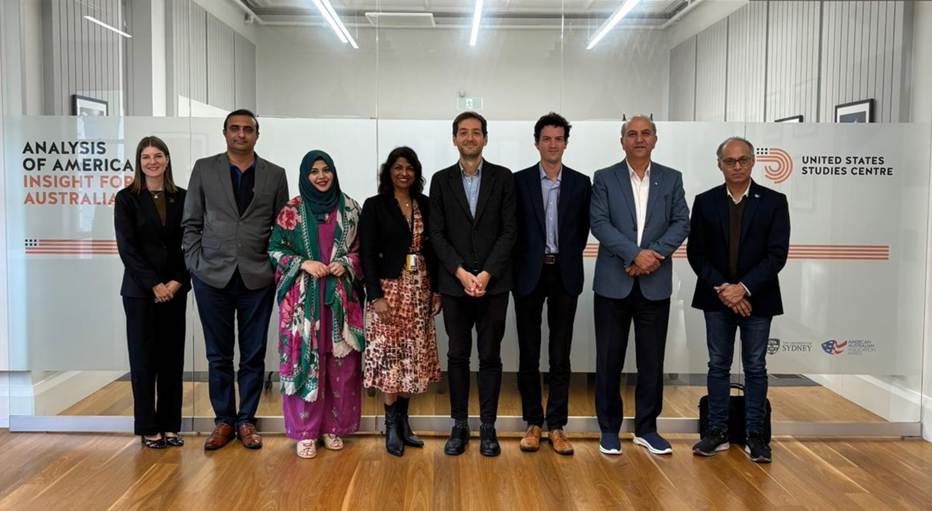
Roundtable at the United States Studies Centre (USSC), University of Sydney, with participation from policy experts including:
- Jared Mondschein, Director Research
- Dr Lavina Lee, Director Foreign Policy and Defence
The discussion focused on US role in Indo-Pacific security, alliance structures, and strategic competition, with implications for South Asia.
10. Sydney | Lowy Institute
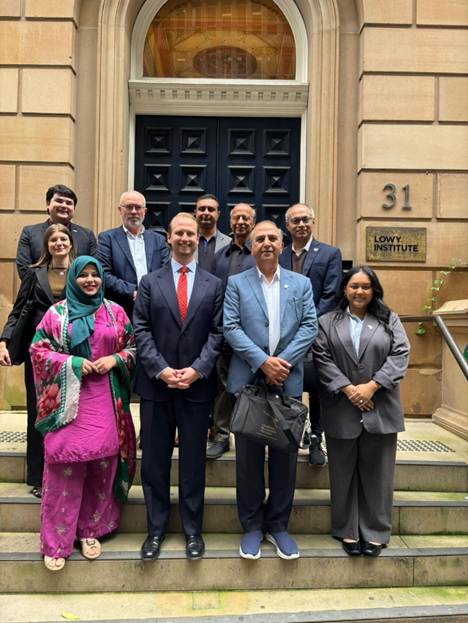
Engagement at the Lowy Institute, including interaction with:
- Charles Lyons-Jones (Research Fellow, Public Opinion and Foreign Policy Program)
- Richard McGregor (Senior Fellow for East Asia)
Discussions focused on Indo-Pacific geopolitics and Australia’s foreign policy outlook. Dr Anum A Khan gave her reflections stating rationale about Pakistan not building ICBMs to attack the US while calling such misperceptions ill-founded and baseless.
11. Policy Lunch with Professor James Curran
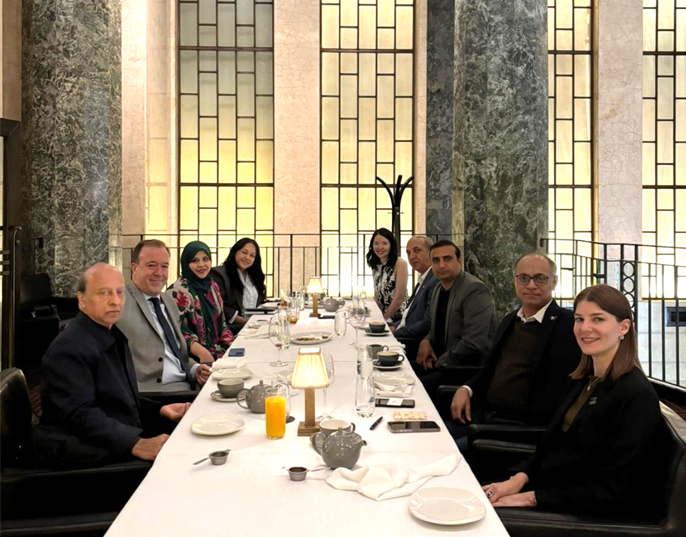
Policy lunch with historian Professor James Curran (University of Sydney), focusing on Australia’s foreign policy trajectory, Indo-Pacific strategy, future of AUKUS and regional security dynamics.
The exchange highlighted the intersection between academic scholarship and policymaking, providing insight into Australia’s strategic thinking.
12. Policy Lunch with Margaret Adamson & Karen Radford
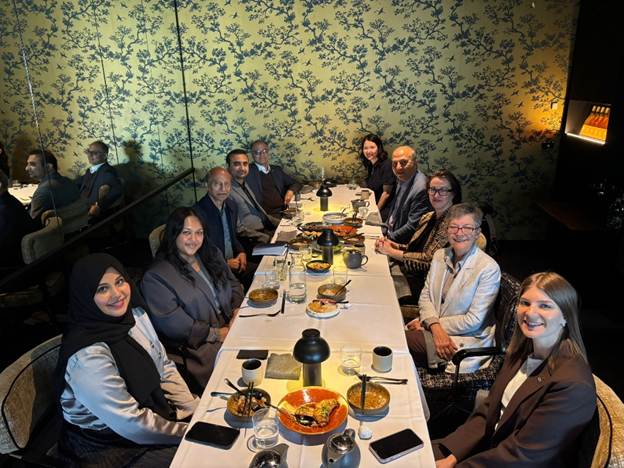
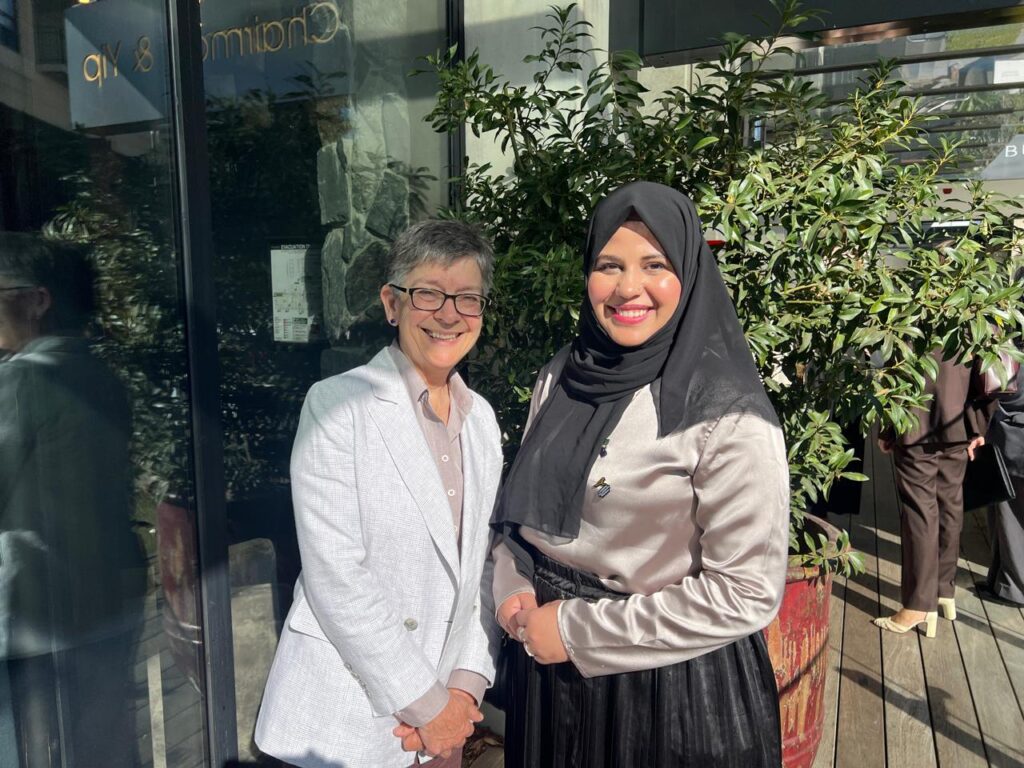
Policy lunch engagement with:
- Margaret Adamson (former Australian High Commissioner to Pakistan)
- Karen Radford (Assistant Secretary, North and South Asia, International Policy Division)
The discussion bridged diplomatic experience and policy formulation, focusing on bilateral relations and regional security challenges. The discussions were also drawn from Margaret’s experience in Pakistan as a former Australian High Commissioner where she travelled all across Pakistan.
13. Canberra | Australian War Memorial – Wreath-Laying Ceremony
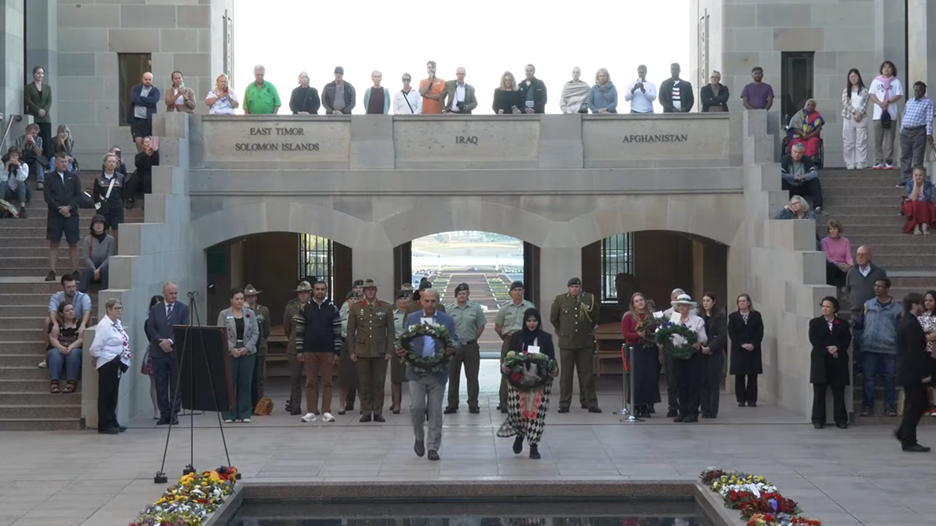
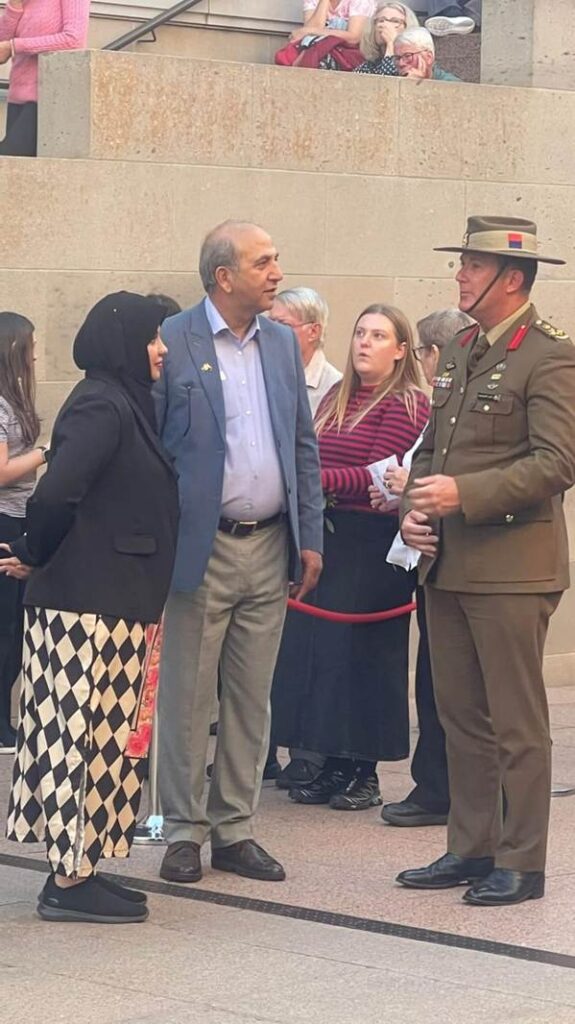
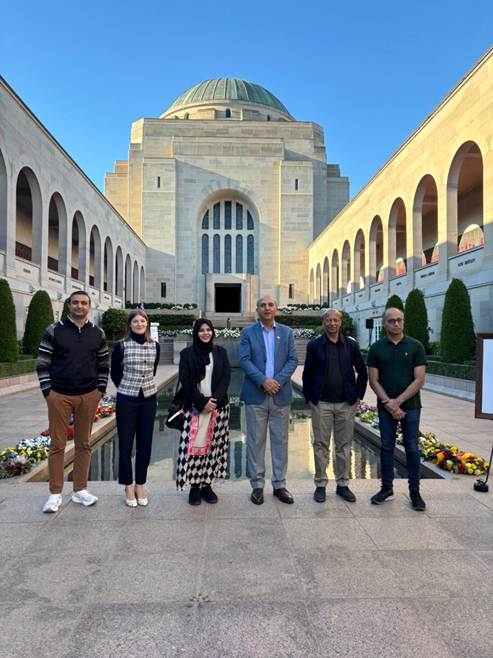
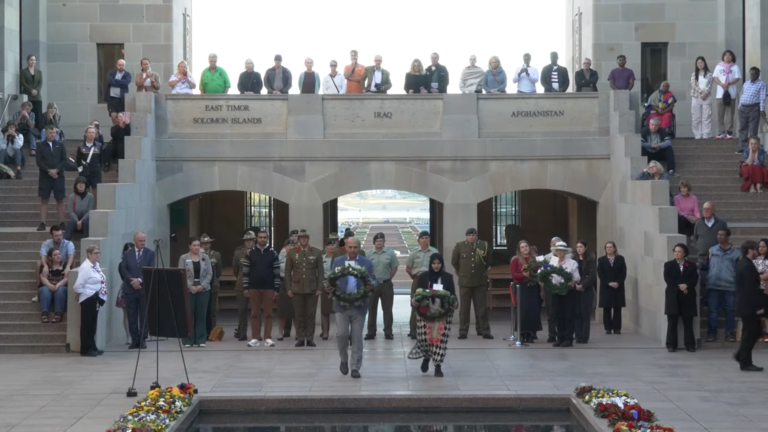
Dr. Anum A. Khan participated in a formal wreath-laying ceremony at the Australian War Memorial in Canberra, as part of the Canberra Fellowship Program 2026.
During the Last Post Ceremony, the service commemorated Cook Hilda Maud Stone, who served during the Second World War. The recounting of her story highlighted the often under-recognized contributions of women in wartime, whose roles have historically remained at the margins of military narratives.
Dr. Khan laid a wreath at the Pond of Reflection, marking a moment of remembrance and respect. The ceremony underscored not only the human cost of war, but also the importance of broadening historical memory to include women’s service, sacrifice, and participation in conflict settings.
From a WPS perspective, such acts of remembrance are significant in challenging traditional, male-dominated understandings of security, while recognizing the diverse roles women have played in shaping resilience and wartime effort.
Coverage of the ceremony is available here:
14. Diplomatic Dinner | High Commissioner’s Residence
Official dinner hosted by the High Commissioner for Pakistan to Australia, bringing together diplomats, policymakers, and delegation members for informal engagement.
15. Cultural & Societal Engagements
Cultural and societal engagements formed an important component of the fellowship, beginning with a formal “Welcome to Country” in Melbourne by Traditional Owners, recognizing the heritage of Aboriginal and Torres Strait Islander peoples. Visits to the Immigration Museum in Melbourne provided insight into Australia’s multicultural identity and migration history, while a guided tour of the Melbourne Cricket Ground (MCG), the site of Pakistan’s 1992 Cricket World Cup victory, offered a moment of shared historical and cultural connection. The program also included an Indigenous walking tour, which highlighted the significance of land, community, and storytelling in First Nations traditions, as well as visits to institutions such as the Australian National Zoo. In Sydney, attendance at a performance of The Phantom of the Opera at the Sydney Harbour provided a unique cultural experience, reflecting Australia’s vibrant artistic landscape. Collectively, these experiences enriched understanding of Australia’s social fabric and the cultural contexts that inform its national identity and policy outlook.
Conclusion
Sustaining such exchanges requires not only continuity, but also the meaningful inclusion of women across policy and strategic dialogues. Strengthening these platforms will deepen mutual understanding and build enduring professional networks between Australia and Pakistan. Institutionalizing these engagements can ensure that collaboration evolves from dialogue into long-term partnership.