NESST Goes Global: Dr Anum A. Khan Addresses Military AI & Nuclear Risks at the UN
Introduction
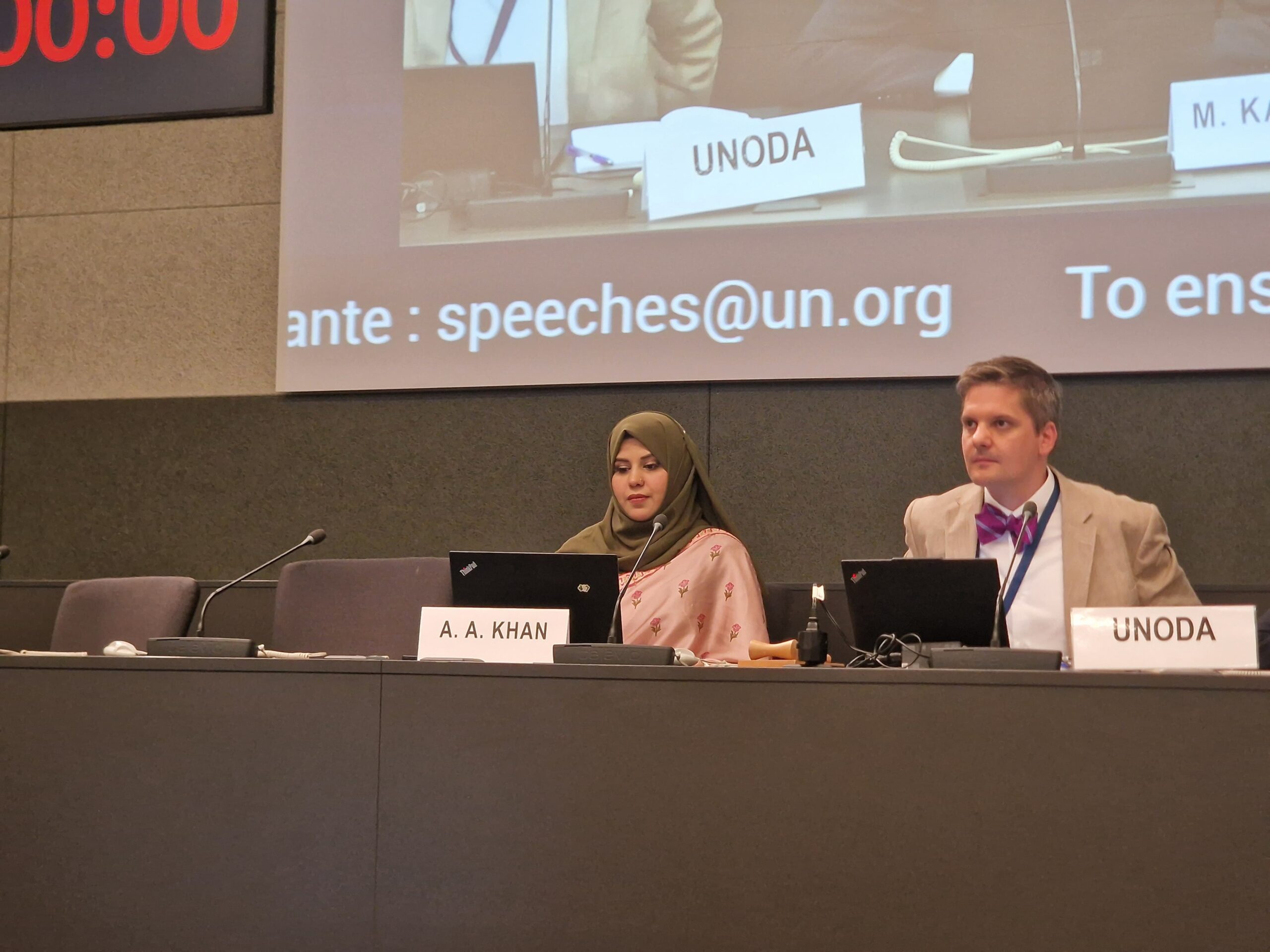
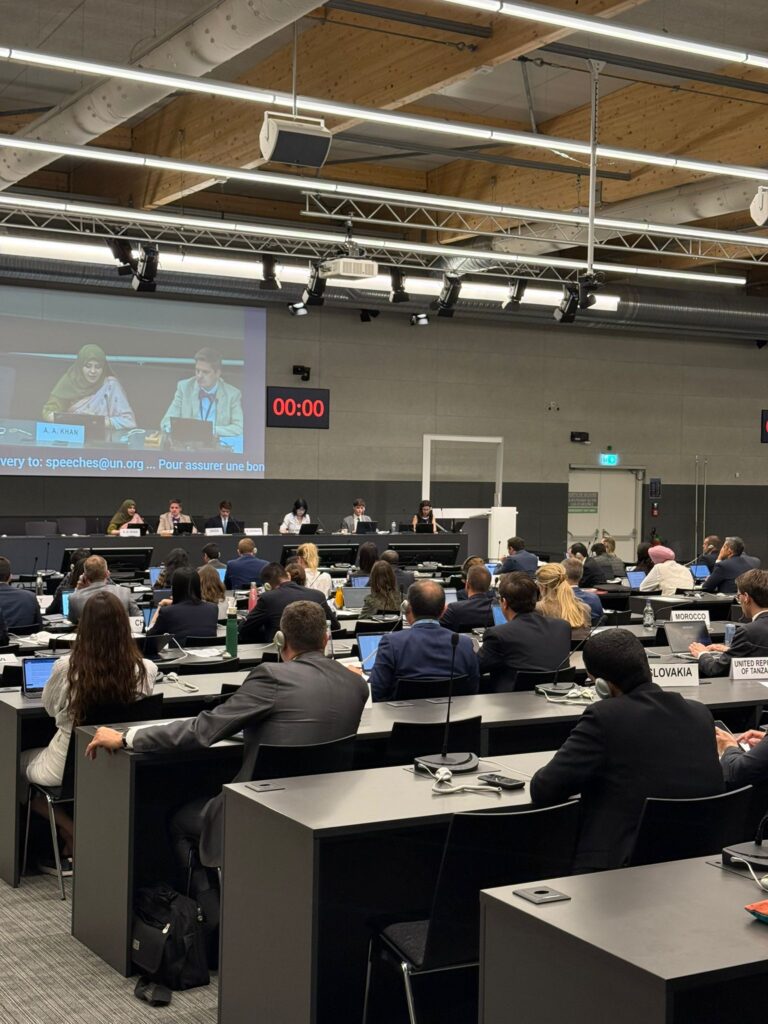
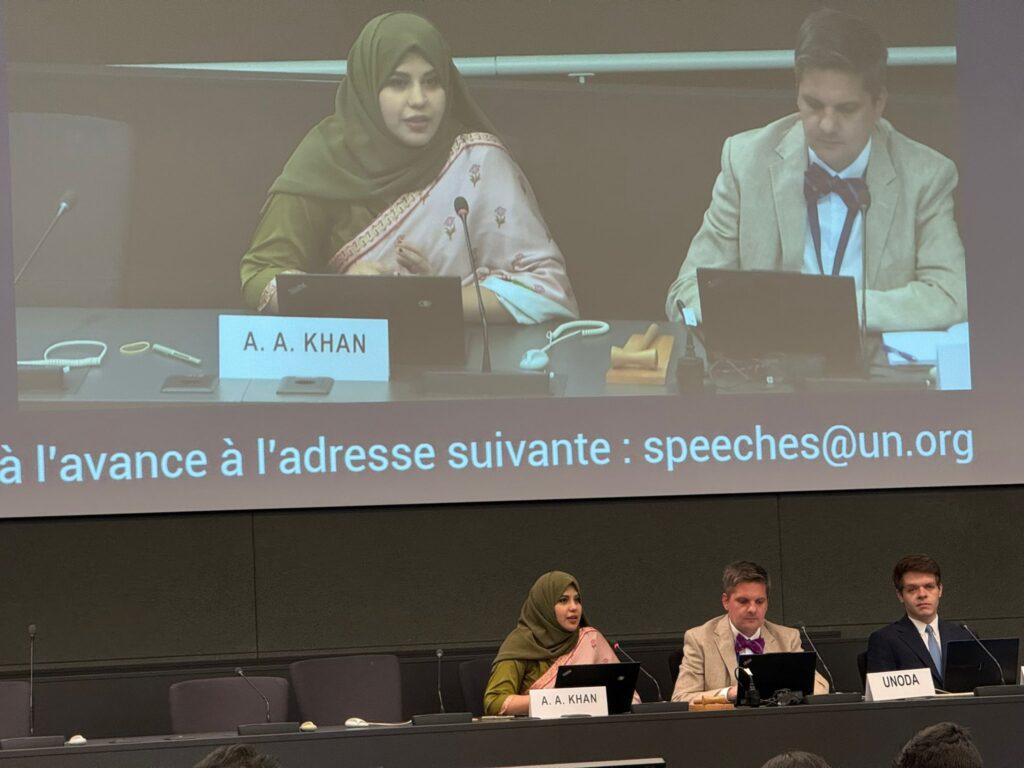
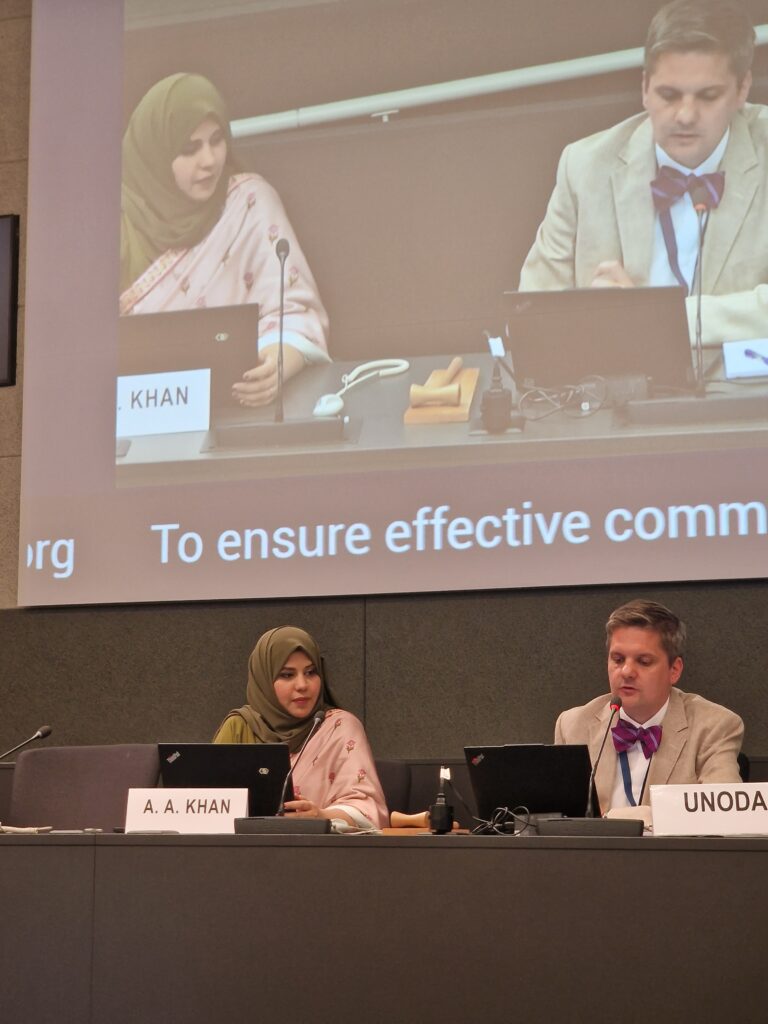
Dr Anum A. Khan, Executive Director of the Network for Security, Strategy and Technology (NESST) participated in the United Nations Office for Disarmament Affairs (UNODA) Informal Exchanges on Artificial Intelligence (AI) in the Military Domain and its Implications for International Peace and Security, held from 15 to 17 June 2026 in Geneva.
The three-day informal exchange provided a timely and important platform for States, international organizations, academia, civil society, technical experts, and other stakeholders to reflect on the evolving role of artificial intelligence in the military domain. Discussions focused on terminology, current trends, the AI life cycle, deployment and use, procurement and decommissioning, the convergence of AI with other technologies, capacity-building, normative proposals, and possible next steps for multilateral dialogue.
Key Focus of Dr Khan’s Participation
The details, Agenda and statements by Khan statements will be available here soon.
Across the exchanges, Dr Khan advanced five broad messages.
First, she stressed that risk in military AI does not begin at the point of deployment. It begins much earlier, at the stages of pre-design, design, data selection, model development, testing, procurement, and operational integration. Early technical choices can produce long-term strategic consequences.
Second, she argued that AI governance in the military domain must adopt a life-cycle approach. This means that legal, ethical, technical, and strategic assessments should continue throughout the entire life of an AI system, from concept and design to deployment, operation, repurposing, withdrawal, and decommissioning.
Third, she emphasized that AI should not be directly integrated into nuclear command and control or nuclear use decision-making. While AI may support monitoring, maintenance, logistics, simulation, and verification under strict human supervision, a clear “AI-nuclear firebreak” is necessary to preserve human judgment and political responsibility.
Fourth, she highlighted the particular importance of small and middle powers, including States from the Global South, in shaping responsible military AI governance. She noted that countries most affected by technological asymmetries must not be treated only as observers in global norm-building.
Fifth, she underlined that future multilateral dialogue should build on the proposals already discussed during the UNODA exchanges, preserve State-led decision-making, and ensure meaningful stakeholder input, including from civil society, academia, technical experts, industry, and regions outside traditional centres of technological power.
Intervention on the Life Cycle of AI in the Military Domain
In the session on the life cycle of AI in the military domain, Dr Khan highlighted that risks are often embedded long before an AI system reaches the battlefield. She argued that in military AI, the first dataset, the first design assumption, the first operational requirement, and the first testing environment can shape how a system behaves under pressure.
Her statement emphasized that the life cycle of AI should include pre-design, design, development, evaluation, testing, deployment, use, procurement, operation, monitoring, and decommissioning. She noted that this is particularly important for high-risk systems, including systems with strategic implications.
Dr Khan recommended that States develop risk-classification frameworks before development begins. Such frameworks should identify whether a system is low-risk, high-risk, or strategically sensitive. Systems linked to targeting, nuclear-related decision support, early warning, autonomous functions, or escalation-sensitive environments should be subject to the highest level of review.
She further proposed that States establish life-cycle review mechanisms rather than one-time approval processes. In her view, an AI system that is safe during testing may not remain safe after software updates, new datasets, battlefield adaptation, changed operational environments, or integration with other platforms. Therefore, review should not end at the deployment stage.
Dr Khan also stressed the importance of “safety cases” before deployment. States should be able to demonstrate that a military AI system has been tested for reliability, legal compliance, operational robustness, data integrity, explainability, and human oversight before it is placed in operational use.
A key part of her intervention was the idea of meaningful human control. She emphasized that human control should not be symbolic or procedural. It must be practical, informed, timely, and capable of overriding system outputs. A human operator cannot exercise meaningful control if the system is too fast, too opaque, or too complex to understand.
Dr Khan also drew attention to decommissioning. She noted that decommissioning is not simply about retiring technology; it is about removing risk. If AI-enabled systems are deployed during conflict, a ceasefire or end of hostilities should trigger a verified shutdown, withdrawal, or safe disposal process. Systems should be physically or digitally prevented from causing harm after hostilities end.
Intervention on Sale, Procurement, Operation and Decommissioning
During discussions on procurement, operation, sale, and decommissioning of military AI applications, Dr Khan presented several practical and out-of-the-box recommendations.
She proposed the idea of an AI Procurement Passport. This would require States and procuring agencies to document the origins, functions, limitations, training data, testing record, update history, vendor dependencies, and legal review status of military AI systems. The purpose would be to prevent “black-box procurement,” where States purchase systems they cannot properly evaluate, control, audit, or safely retire.
She also recommended an Algorithmic End-Use Certificate, especially for military AI applications that may be transferred, sold, or adapted across borders. This would help prevent sensitive AI capabilities from being misused, illegally transferred, repurposed by non-State actors, or deployed in ways inconsistent with international law.
Dr Khan highlighted the need for a “Know Your Model” approach, similar to due diligence practices in other sensitive domains. States should not only know the vendor or supplier; they should understand the model, the data, the limitations, the dependencies, the update mechanisms, and the risk of unintended use.
She further proposed a traffic-light system for military AI procurement and industry engagement. Low-risk systems could be categorized as green, requiring ordinary oversight. Medium-risk systems could be categorized as amber, requiring enhanced testing and review. High-risk or strategically sensitive systems could be categorized as red, requiring strict legal, ethical, technical, and political scrutiny before procurement or deployment.
Another recommendation was the inclusion of sunset clauses in military AI procurement contracts. These clauses would require periodic review, renewal, or withdrawal of systems after a defined period. This would prevent outdated, untested, or poorly understood AI systems from remaining in military use indefinitely.
Dr Khan also proposed the idea of a military AI recall mechanism. If a system is found to be unreliable, legally problematic, vulnerable to manipulation, or unsafe in operational conditions, States should have procedures to suspend, recall, patch, or decommission that system.
Her intervention underlined that procurement is not only a financial or technical process. It is a strategic governance process. States must build domestic capacity to assess what they are buying, how it will behave, how it can be controlled, and how it can be safely withdrawn from service.
Intervention on AI and Other Technologies
In the session on AI and other technologies, Dr Khan focused on the convergence of AI with nuclear weapons, cyber operations, information warfare, and emerging technologies such as quantum systems.
She stated that AI can create opportunities for risk reduction, including improved detection, verification, monitoring, early warning resilience, and data analysis. However, she cautioned that the same technologies can also create new risks if they compress decision-making time, generate false confidence, enable manipulation, or are integrated into strategic systems without sufficient safeguards.
A central theme of her statement was the AI-nuclear nexus. Dr Khan argued that AI should not be directly integrated into nuclear command and control or nuclear use decision-making. She emphasized the need for an AI-nuclear firebreak, meaning a clear boundary between AI-enabled support functions and nuclear launch authority.
She noted that AI may assist in monitoring, maintenance, logistics, anomaly detection, and verification, but nuclear decision-making must remain under human political control. The speed and opacity of AI systems make them particularly risky in escalation-sensitive contexts, where misinterpretation or automation bias could have catastrophic consequences.
Dr Khan also addressed the role of information warfare and public opinion warfare. She argued that nuclear early warning systems do not operate in a political vacuum. In an AI-enabled crisis, deepfakes, synthetic media, fake satellite imagery, manipulated social media trends, and coordinated digital narratives can create a false sense of urgency. They can make leaders, publics, and media ecosystems believe that an attack is imminent, that mobilization has already begun, or that an adversary has crossed a red line.
She emphasized that while such digital narratives may not directly alter technical early warning data, they can shape the political environment in which warning is interpreted. In nuclear crises, false digital narratives can become dangerous amplifiers of fear, mistrust, and pressure for rapid response. Therefore, risk reduction must include crisis communication, counter-disinformation channels, and mechanisms to verify digital claims before they influence strategic decision-making.
Dr Khan also highlighted quantum technologies as an emerging factor in early warning and deterrence. Quantum sensing, quantum clocks, quantum-enabled navigation, and secure quantum communications may improve detection, tracking, and resilience. At the same time, if quantum sensing makes survivable platforms such as submarines or mobile missile systems more detectable, States may fear that second-strike capabilities are becoming vulnerable. This could create pressure to disperse forces, raise alert levels, delegate authority, or respond more quickly in a crisis.
Her intervention therefore emphasized that converging technologies must be governed together. AI, cyber, quantum, space, and information operations cannot be treated as isolated categories when their combined effects shape strategic stability.
Focus on Nuclear Risk Reduction and Strategic Stability
Throughout the exchanges, Dr Khan emphasized that military AI governance must pay special attention to nuclear risk reduction. She argued that the most dangerous use of AI is not necessarily the direct automation of nuclear launch decisions, but the more subtle shaping of human perception, warning, threat assessment, and escalation choices.
She highlighted the risk of automation bias, where decision-makers may over-trust machine-generated outputs during a crisis. She also emphasized the risk of speed, where AI compresses the time available for political judgment, verification, and diplomacy. In nuclear affairs, she argued, the fastest answer is not always the safest answer.
Dr Khan recommended that States consider an Algorithmic Pause Principle. Under this principle, the faster an AI system produces a warning or recommendation, the more deliberate the human review process should become. AI should buy time for leaders; it should not steal time from them.
She also stressed the need for dual confirmation and human-understandable explanation in early warning systems. Decision-makers should not only be told that a threat has been detected. They should be told what evidence supports the warning, what evidence contradicts it, what uncertainty remains, and what alternative explanations may exist.
South Asian and Global South Perspective
Dr Khan’s participation brought a South Asian and Global South perspective to the discussions. She emphasized that the impact of AI-enabled military modernization does not remain confined to major powers. It also travels into regional security environments.
She noted that South Asia is a nuclearized region with unresolved disputes, compressed geography, short missile flight times, and a history of crises. In such an environment, AI-enabled surveillance, cyber capabilities, missile defence, early warning, drones, information warfare, and decision-support tools can affect deterrence stability.
She argued that modernization by one State may be defensive in intention, but can still make others insecure. This is particularly relevant where advanced technology partnerships create asymmetries in access, confidence, and perception.
Dr Khan highlighted that India’s growing defence and emerging technology cooperation with the United States, including in areas such as space, cyber, drones, maritime domain awareness, AI, semiconductors, and advanced military systems, is viewed carefully in Pakistan. From India’s perspective, such cooperation supports modernization and its wider strategic role. From the United States’ perspective, it strengthens a major strategic partnership. However, in South Asia, such modernization can also influence Pakistan’s threat perception, especially when dual-use technologies may affect surveillance, early warning, missile defence, and strategic stability.
She noted that Pakistan’s high-end strategic technology partnerships are comparatively narrower and centered largely on China. This creates an asymmetry in access to advanced technologies and contributes to regional insecurity. U.S.-China competition influences U.S.-India cooperation; U.S.-India cooperation affects Pakistan’s threat perception; Pakistan-China cooperation then becomes more central to Pakistan’s balancing strategy. This chain effect shows how major-power technology competition becomes embedded in South Asian deterrence dynamics.
Dr Khan recommended that existing India-Pakistan confidence-building measures be updated for the age of AI, cyber, space, and information operations. She called for dialogue on AI-related nuclear risks, norms against cyber interference with nuclear command and control systems, and crisis communication mechanisms capable of functioning in fast-moving, AI-enabled conflicts.
Reflections on International Cooperation and Capacity-Building
Dr Khan also emphasized the importance of capacity-building for responsible AI governance in the military domain. She argued that many States, particularly from the Global South, may be affected by military AI developments without having equal technical capacity to assess, govern, or shape them.
She recommended that international cooperation should include technical training, policy toolkits, model risk assessment frameworks, legal review capacity, AI literacy for diplomats, and opportunities for peer-to-peer exchange. She also stressed that capacity-building should not be limited to peaceful civilian AI, but should include the security implications of AI in the military domain.
In her view, inclusive participation is essential for legitimacy. If norms are shaped only by technologically advanced States, they may not reflect the security concerns of regions most vulnerable to instability, asymmetry, and crisis escalation.
Contribution to Normative Proposals and Next Steps
In discussions on existing and emerging normative proposals, Dr Khan called for practical, flexible, and adaptable norms. She argued that the international community should avoid overly abstract principles that cannot be operationalized.
Her proposed normative contributions included:
- A clear commitment that AI should not be directly integrated into nuclear command and control or nuclear use decision-making.
- A life-cycle governance framework for military AI.
- AI procurement transparency and due diligence through tools such as AI Procurement Passports and Algorithmic End-Use Certificates.
- Incident learning mechanisms for AI-related failures.
- Risk classifications for military AI systems.
- Sunset clauses and recall mechanisms for military AI.
- Norms against cyber and counterspace operations targeting nuclear early warning and command systems.
- Crisis communication channels for AI-enabled escalation risks.
- Inclusion of Global South perspectives in norm development.
Dr Khan also emphasized that the next phase of dialogue should build on the proposals discussed during the informal exchanges. She recommended that proceedings, stakeholder statements, and key proposals be compiled and made available so that future discussions do not begin from zero.
Closing Reflections
In her closing reflections, Dr Khan thanked UNODA and the organizers for convening an important and timely exchange. She noted that the discussions complemented ongoing debates in other multilateral and expert forums, and helped create space for more focused engagement on AI in the military domain.
She emphasized that the next dialogue should build upon the concrete proposals already presented by States and stakeholders. She also highlighted the importance of including the statements and perspectives of all stakeholders, including civil society, academia, scientific experts, and voices from the Global South.
Dr Khan’s closing message was that AI governance in the military domain must remain inclusive, coherent, practical, and forward-looking. Future discussions should preserve State-led decision-making while also benefiting from technical, legal, ethical, and regional expertise.
She concluded that artificial intelligence may support international peace and security if governed responsibly, but without safeguards it can also accelerate escalation, deepen mistrust, and create new risks in already fragile security environments.
Overall Impact of Participation
Dr Anum A. Khan’s participation in the UNODA Informal Exchanges strengthened NESST’s role as an emerging platform contributing to debates on artificial intelligence, strategic stability, nuclear risk reduction, and responsible technology governance.
Her interventions brought together policy, technical, legal, and regional perspectives. They also placed particular emphasis on the AI-nuclear nexus, South Asian strategic stability, Global South inclusion, procurement safeguards, decommissioning, information warfare, quantum technologies, and the need for practical risk reduction mechanisms.
NESST’s engagement at the UNODA Informal Exchanges reflects its broader commitment to advancing informed, inclusive, and policy-relevant discussions on emerging technologies and international security.
The exchanges provided an important opportunity to contribute to multilateral dialogue at a critical moment when artificial intelligence is increasingly shaping military systems, strategic competition, and global security. Dr Khan’s participation underscored the need for responsible innovation, human judgment, strategic restraint, and concrete international cooperation.
Conclusion
The UNODA Informal Exchanges on Artificial Intelligence in the Military Domain provided a significant platform for addressing one of the most pressing security challenges of the contemporary era. Dr Anum A. Khan’s participation as Executive Director of NESST contributed to a more nuanced understanding of how AI affects strategic stability, nuclear risk reduction, regional security, and responsible military governance.
Her interventions advanced the view that AI should be governed not only as a technology, but as a strategic force with the potential to reshape crisis behaviour, deterrence calculations, and international peace and security.
For NESST, the participation marked an important step in its international engagement on emerging technologies, security, and strategic stability. It also reinforced NESST’s commitment to promoting inclusive, practical, and future-oriented approaches to AI governance in the military domain.
Artificial intelligence may help States detect better, decide faster, and operate more efficiently. But in matters of war, peace, and nuclear risk, the ultimate objective must not be speed alone. The objective must be safety, responsibility, accountability, and restraint.